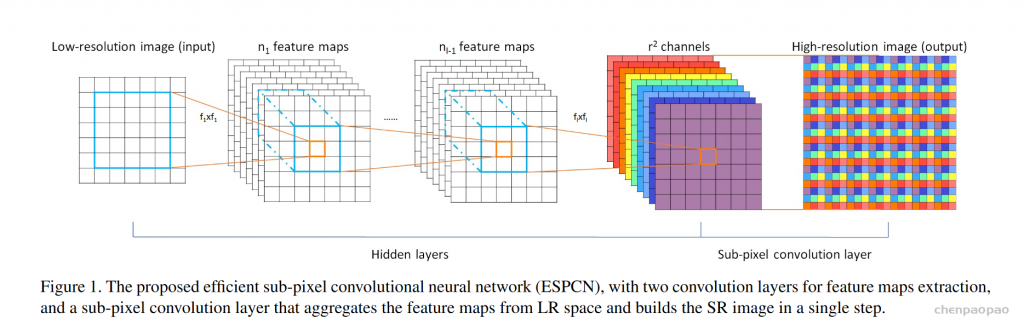
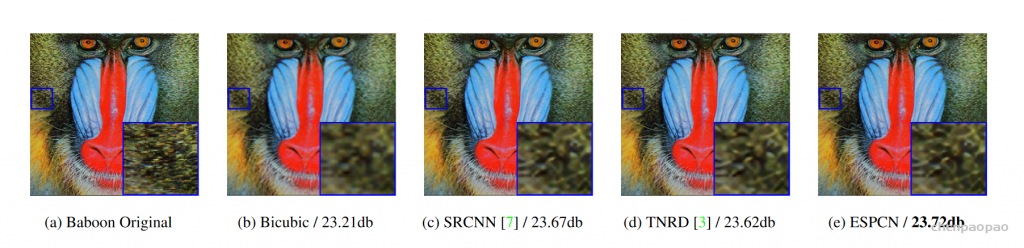
这篇论文主要就是提出了一种新的亚像素卷积层(sub-pixel convolutional layer),以往的方法,为了生成高分辨率的输出,一般是先对输入进行上采样扩大图像分辨率,得到与高分辨率图像同样的大小,再作为网络输入,意味着卷积操作在较高的分辨率上进行,相比于在低分辨率的图像上计算卷积,会降低效率。 ESPCN(Real-Time Single Image and Video Super-Resolution Using an Efficient Sub-Pixel Convolutional Neural Network,CVPR 2016)提出一种在低分辨率图像上直接计算卷积得到高分辨率图像的高效率方法。
如果想最后的分辨率从 n 到 rn,ESPCN会生成r*r个通道,再进行sub-pixel convolutional,生成高分辨率的图片。假设是9通道 混合,这里的通道混合是将每个通道对应位置的元素重新排列成3*3的图像。这个变换虽然被称作sub-pixel convolution, 但实际上并没有卷积操作。
对volumetric输入(3维——点云数据),输入数据Tensor格式为5维:minibatch x channels x depth x height x width 对spatial输入(2维——jpg、png等数据),输入数据Tensor格式为4维:minibatch x channels x height x width 对temporal输入(1维——向量数据),输入数据Tensor格式为3维:minibatch x channels x width
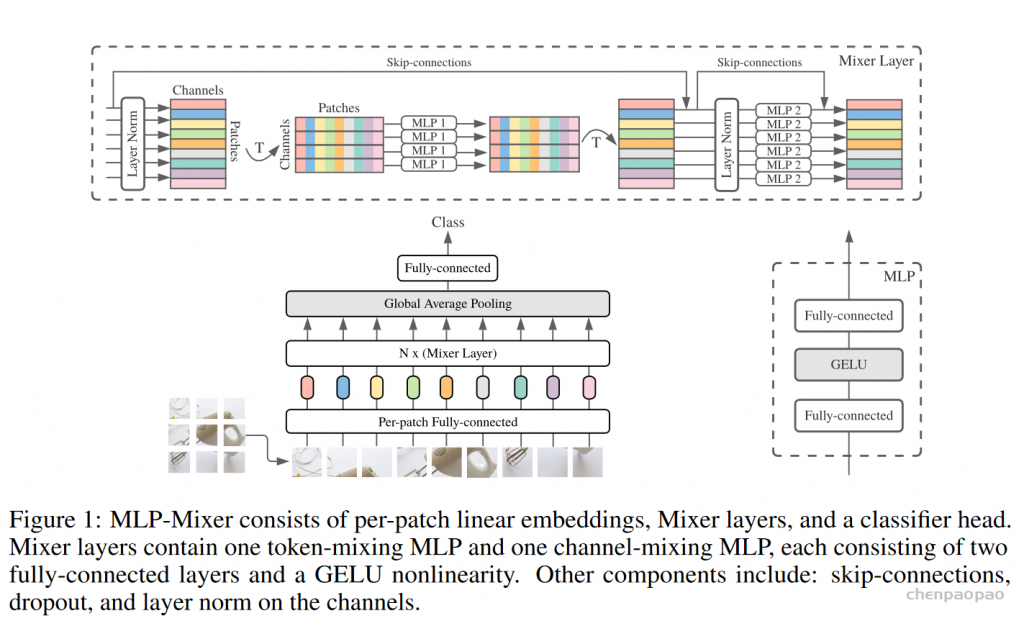
Rearrange(‘b n d -> b d n’) #这里是[batch_size, num_patch, dim] -> [batch_size, dim, num_patch]
#定义多层感知机
import torch
import numpy as np
from torch import nn
from einops.layers.torch import Rearrange
from torchsummary import summary
import torch.nn.functional as F

class FeedForward(nn.Module):
    def __init__(self,dim,hidden_dim,dropout=0.):
        super().__init__()
        self.net=nn.Sequential(
            #由此可以看出 FeedForward 的输入和输出维度是一致的
            nn.Linear(dim,hidden_dim),
            #激活函数
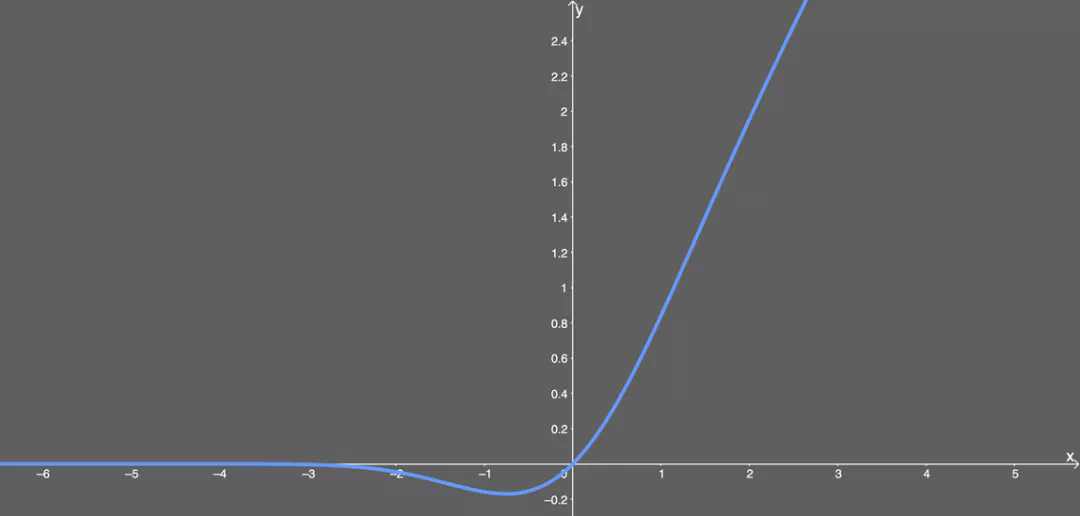
            nn.GELU(),
            #防止过拟合
            nn.Dropout(dropout),
            #重复上述过程
            nn.Linear(hidden_dim,dim),

            nn.Dropout(dropout)
        )
    def forward(self,x):
        x=self.net(x)
        return x


class MixerBlock(nn.Module):
    def __init__(self,dim,num_patch,token_dim,channel_dim,dropout=0.):
        super().__init__()
        self.token_mixer=nn.Sequential(
            nn.LayerNorm(dim),
            Rearrange('b n d -> b d n'),   #这里是[batch_size, num_patch, dim] -> [batch_size, dim, num_patch]
            FeedForward(num_patch,token_dim,dropout),
            Rearrange('b d n -> b n d')    #[batch_size, dim, num_patch] -> [batch_size, num_patch, dim]

         )
        self.channel_mixer=nn.Sequential(
            nn.LayerNorm(dim),
            FeedForward(dim,channel_dim,dropout)
        )
    def forward(self,x):

        x=x+self.token_mixer(x)

        x=x+self.channel_mixer(x)

        return x

class MLPMixer(nn.Module):
    def __init__(self,in_channels,dim,num_classes,patch_size,image_size,depth,token_dim,channel_dim,dropout=0.):
        super().__init__()
        assert image_size%patch_size==0
        self.num_patches=(image_size//patch_size)**2
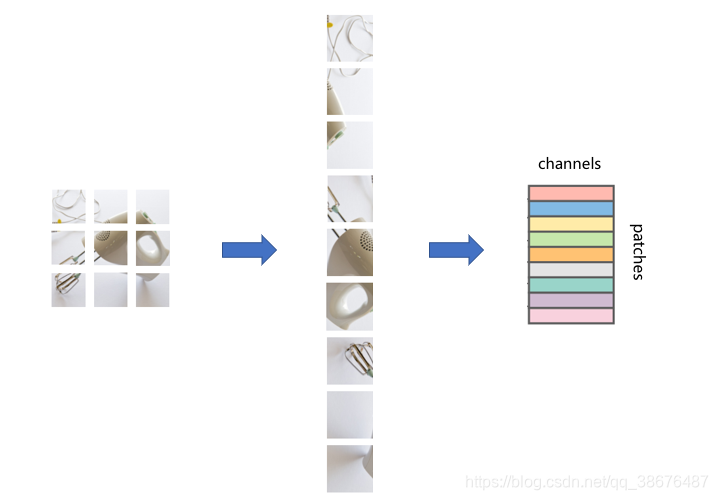
        #embedding 操作,用卷积来分成一小块一小块的
        self.to_embedding=nn.Sequential(nn.Conv2d(in_channels=in_channels,out_channels=dim,kernel_size=patch_size,stride=patch_size),
            Rearrange('b c h w -> b (h w) c')
        )
        #经过Mixer Layer 的次数
        self.mixer_blocks=nn.ModuleList([])
        for _ in range(depth):
            self.mixer_blocks.append(MixerBlock(dim,self.num_patches,token_dim,channel_dim,dropout))
        self.layer_normal=nn.LayerNorm(dim)

        self.mlp_head=nn.Sequential(
            nn.Linear(dim,num_classes)
        )
    def forward(self,x):
        x=self.to_embedding(x)
        for mixer_block in self.mixer_blocks:
            x=mixer_block(x)
        x=self.layer_normal(x)
        x=x.mean(dim=1)

        x=self.mlp_head(x)

        return x