Reviewers have strong ideas about what makes a paper acceptable in top conferences like CVPR. They know that getting into such conferences is hard and that getting a paper in is prestigious. So, the papers that get in must be really special. This is true, but what makes a paper special? A key focus of many reviewers is novelty. But what is novelty in science?
I see reviewers regularly mistake complexity, difficulty, and technicality for novelty. In science reviewing, novelty seems to imply these things. We might be better served by removing the word “novelty” from the review instructions and replacing it with beauty.
Beauty removes the notions of “technical” and “complex” and gets more to the heart of scientific novelty. A painting can be beautiful even if it is simple and the technical complexity is low. So can a paper. A little squiggle of paint by Picasso can be as beautiful as an intricate painting by Rembrandt.
Keeping beauty in mind, let’s look at some common reviewer misunderstandings about novelty.
Novelty as complexity
The simplicity of an idea is often confused with a lack of novelty when exactly the opposite is often true. A common review critique is
The idea is very simple. It just changes one term in the loss and everything else is the same as prior work.
If nobody thought to change that one term, then it is ipso facto novel. The inventive insight is to realize that a small change could have a big effect and to formulate the new loss.
Such reviews lead my students to say that we should make an idea appear more complex so that reviewers will find it of higher value. I value simplicity over unnecessary complexity; the simpler the better. Taking an existing network and replacing one thing is better science than concocting a whole new network just to make it look more complex.
Novelty as difficulty
It’s hard to get a paper into a top conference, therefore reviewers often feel that the ideas and technical details must be difficult. The authors have to shed blood, sweat, and tears to deserve a paper. Inexperienced reviewers, in particular, like to see that the authors have really worked hard.
Formulating a simple idea means stripping away the unnecessary to reveal the core of something. This is one of the most useful things that a scientist can do.
A simple idea can be important. But it can also be trivial. This is where reviewers struggle. A trivial idea is an unimportant idea. If a paper has a simple idea that works better than the state of the art, then it is most likely not trivial. The authors are onto something and the field will be interested.
Novelty as surprise
Novelty and surprise are closely related. A novel idea is a surprising one by definition — it’s one that nobody in the field thought of. But there is a flip side to this as surprise is a fleeting emotion. If you hear a good idea, there is a moment of surprise and then, the better it is, the more obvious it may seem. A common review:
The idea is obvious because the authors just combined two well known ideas.
Obvious is the opposite of novelty. So, if an idea is obvious after you’ve heard it, reviewers quickly assume it isn’t novel. The novelty, however, must be evaluated before the idea existed. The inventive novelty was to have the idea in the first place. If it is easy to explain and obvious in hindsight, this in no way diminishes the creativity (and novelty) of the idea.
Novelty as technical novelty
The most common misconception of reviewers is that novelty pertains to technical details. Novelty (and value) come in many forms in papers. A new dataset can be novel if it does something no other dataset has done, even if all the methods used to generate the dataset are well known. A new use of an old method can be novel if nobody ever thought to use it this way. Replacing a complex algorithm with a simple one provides insight.
Novelty reveals itself in as many ways as beauty. Before critiquing a paper for a lack to technical novelty ask yourself if the true novelty lies elsewhere.
Novelty as usefulness or value
Not all novel ideas are useful. Just the property of being new does not connote value. We want new ideas that lead us somewhere. Here, reviewers need to be very careful. It’s very hard to know where a new idea will take the field because any predictions that we make are based on the field as it is today.
A common review I get is
The authors describe a new method but I don’t know why anyone needs this.
Lack of utility is indeed an issue but it is very hard to assess with a new idea. Reviewers should be careful here and aware that we all have limited imagination.
A personal note
My early career was built on seeing and formalizing connections between two established fields: robust statistics and Markov random fields. The novelty arose from the fact that nobody had put these ideas together before. It turned out to be a fertile space with many surprising connections that led to new theory. Fortunately, these connections also turned out to be valuable, resulting in practical algorithms that were state of the art.
With hindsight, the connection between robust statistics and outliers in computer vision seems obvious. Today, the use of robust estimators in vision is the norm and seems no more novel than breathing air. But to see the connections for the first time, before others saw them, was like breathing for the first time.
There is little in life more exciting than that spark of realization in science when you glimpse a new way of seeing. You feel as if you were the first to stand on a mountain peak. You are seeing the world for a moment the way nobody before you has ever seen it. This is novelty and it happens in an instant but is enabled by all of one’s experience.
The resulting paper embodies the translation of the idea into code, experiments, and text. In this translation, the beauty of the spark may be only dimly glimpsed. My request of reviewers is to try to imagine the darkness before the spark.
二分图又称作二部图,是图论中的一种特殊模型。 设G=(V,E)是一个无向图,如果顶点V可分割为两个互不相交的子集(A,B),并且图中的每条边(i,j)所关联的两个顶点i和j分别属于这两个不同的顶点集(i in A,j in B),则称图G为一个二分图。简而言之,就是顶点集V可分割为两个互不相交的子集,并且图中每条边依附的两个顶点都分属于这两个互不相交的子集,两个子集内的顶点不相邻。
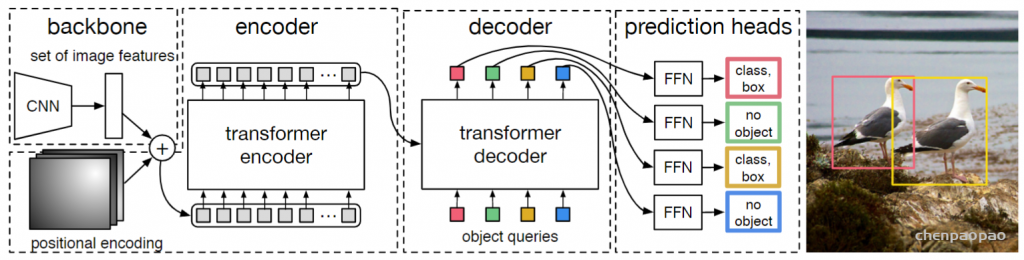
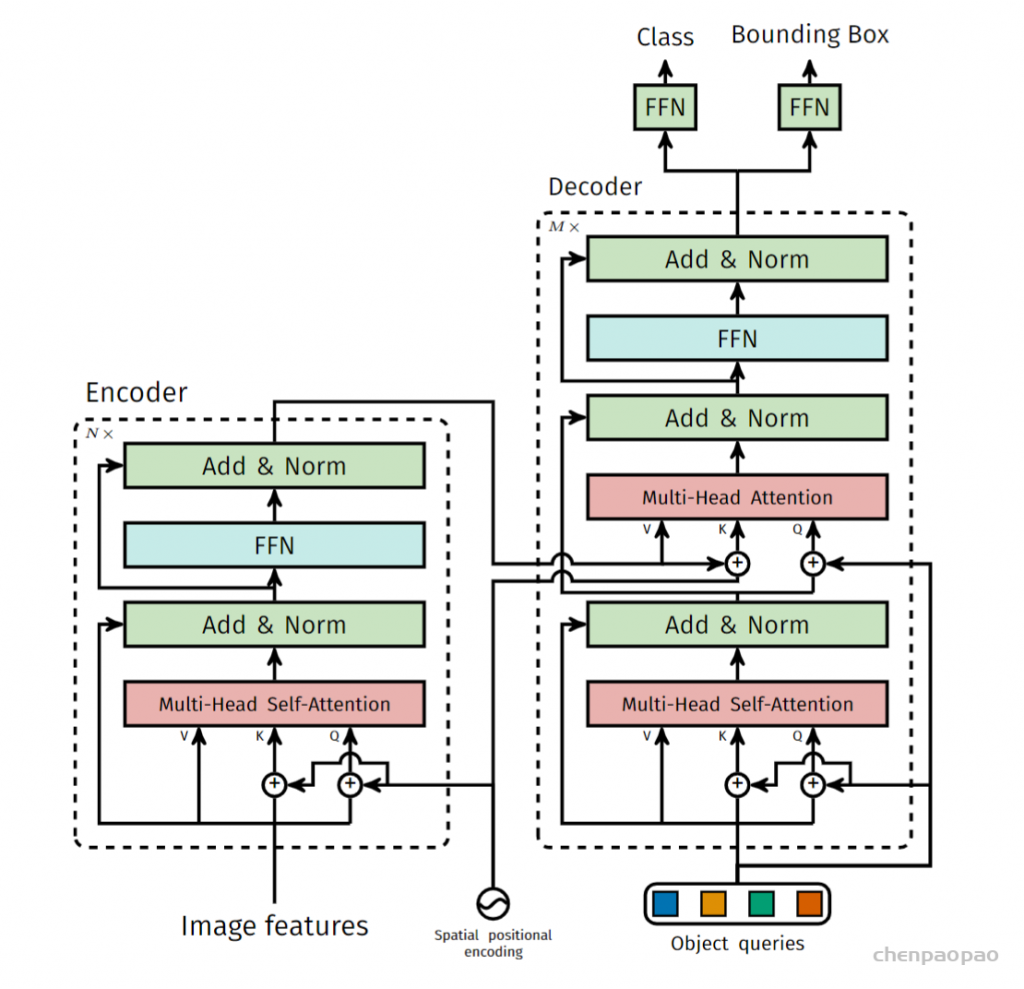
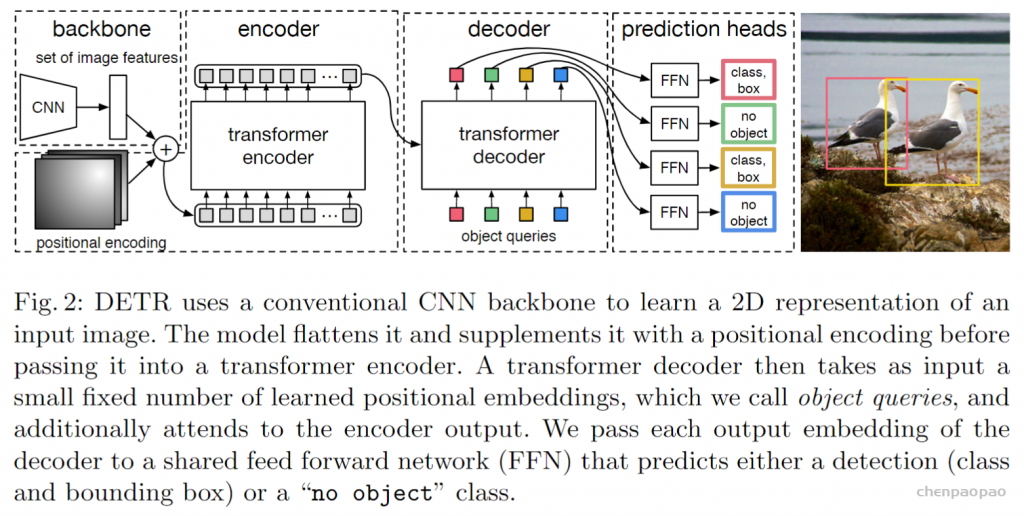
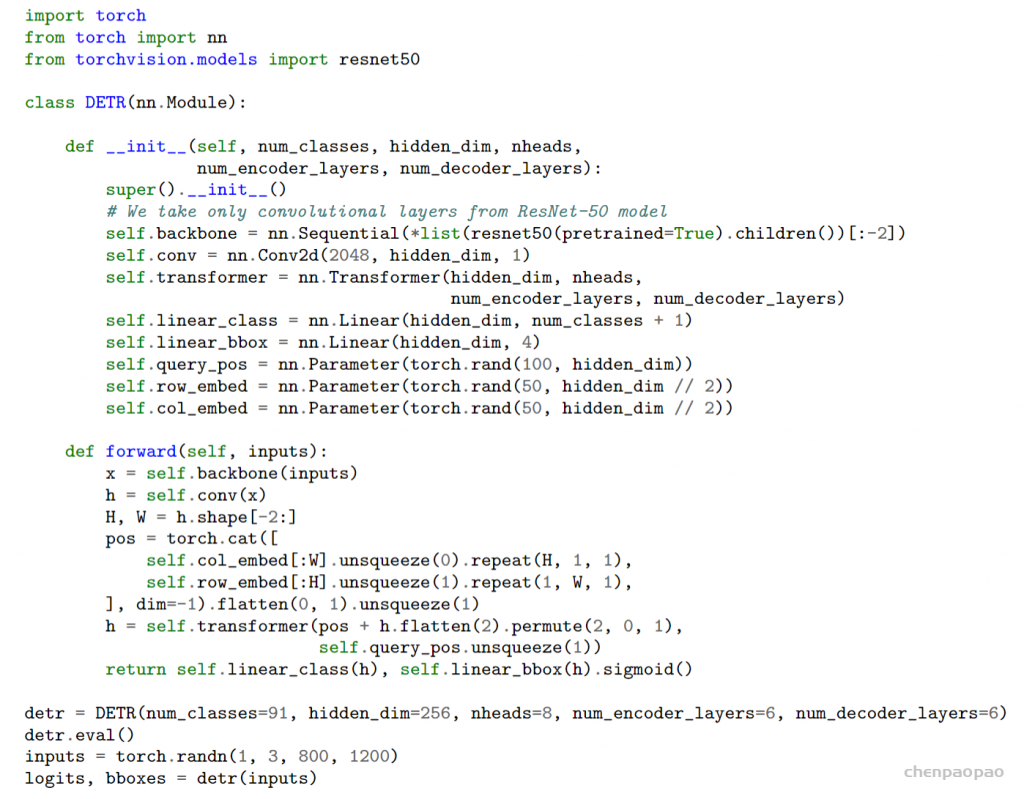
另外scipy包提供的linear sum assignment可以完成这个最优排列。detr论文里:代码也用的linear sum assignment函数来计算对应的匹配关系,只需要提供一个cost matrix矩阵就可以。a,b,c看成100个预测框,x,y,z看成GT框, cost matrix 损失矩阵未必都是正方形,最后丢到这个函数里面得到一个最优匹配。
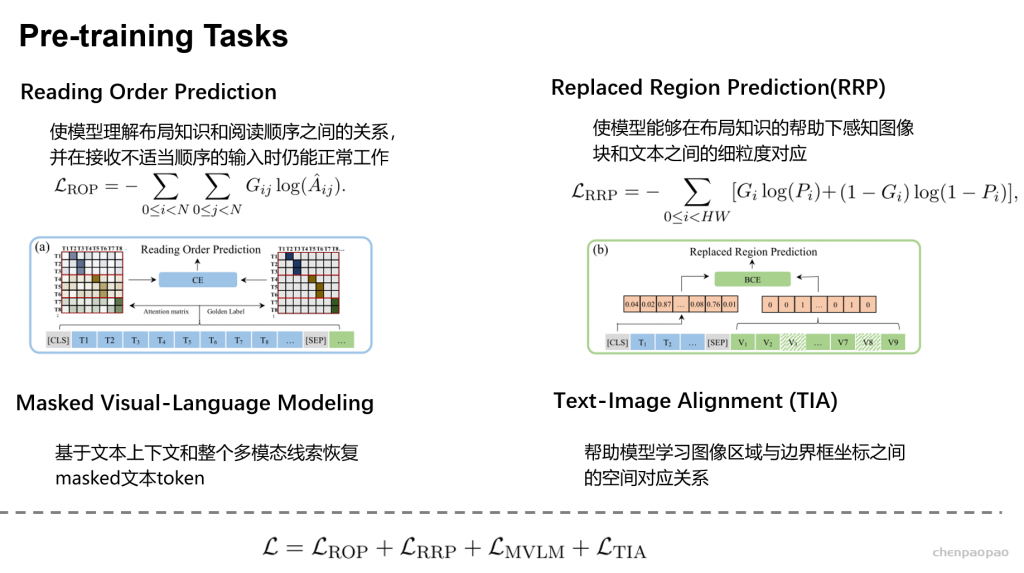
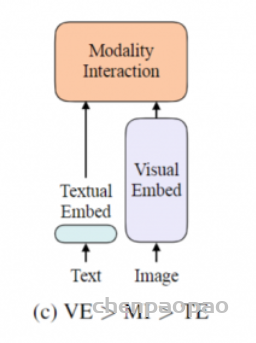
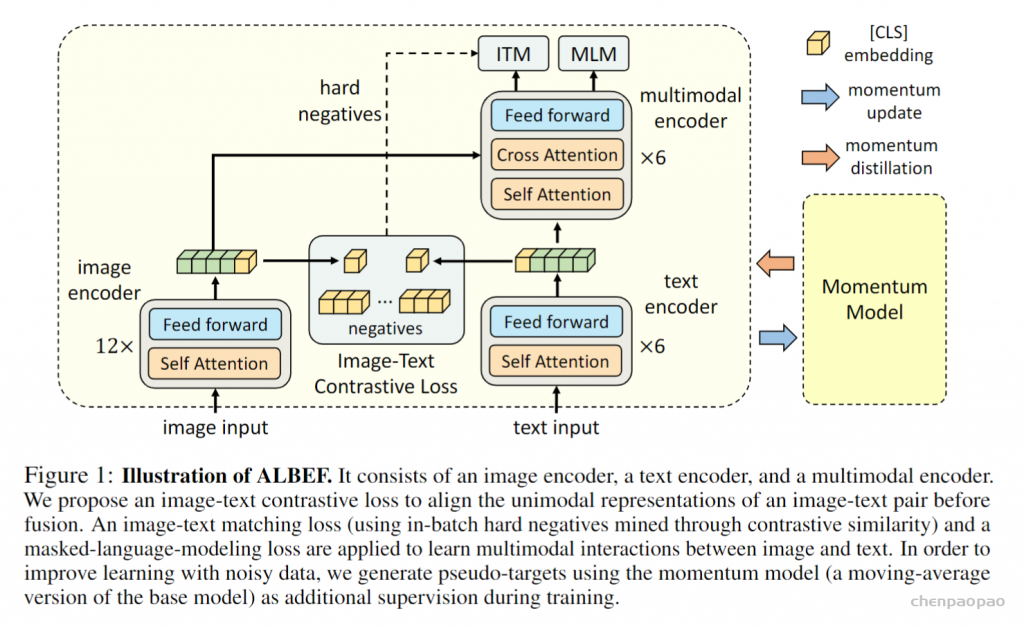
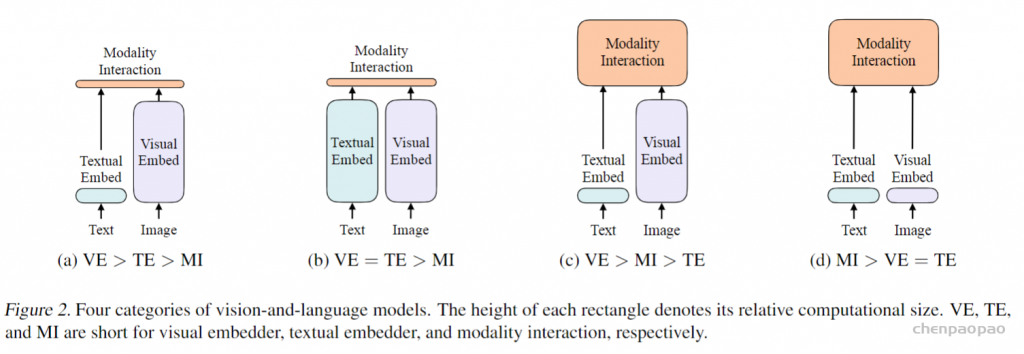
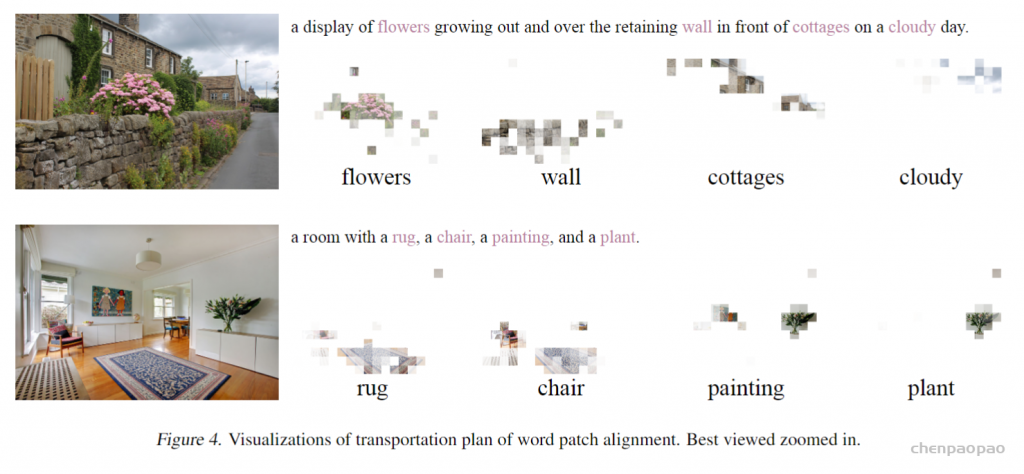
写在前面:最近看了很多多模态的工作,现有的设计有哪些不足?我们又该如何去改进呢?首先来看模型的结构,因为需要处理文本和图片,所以模型开始需要有两个分支,分别抽取图像和文本特征。但是在多模态领域,视觉特征的重要性远远大于文本特征,所以要使用更强大的vision Embed,比如vit,同时对于多模态任务,多模态之间的融合也是十分重要的,也要保证模态融合的模型也要尽可能的大,因此网络应该跟(c)相近。模型确定了,接下来如何去训练呢?我们知道CLIP模型使用了一个对比学习的loss:ITCloss,这个效果很好,所以可以使用。另外常见的两个loss: image text matching(ITM),另一个是masked language modeling(MLM) 也可以继续使用。再回到ALBEF论文,其实它就是按照上述思路进行的设计。
在训练过程中,训练基础模型,使其预测与动量模型的预测相匹配。具体来说,对于ITC,作者首先使用动量单模态编码器的特征计算图像-文本相似性,这个可以认为是一个softmax score,不再是一个 one hot向量。这样在模型训练的时候,我们希望在训练原始model的时候,不只是让预测跟目标值one hot尽可能接近,也希望能够和动量模型的输出保持一致,这样就能达到一个比较好的折中点,很多信息从one hot label来学习,但是当one hot label是错误的或者是有噪声的时候,我们希望这个稳定的动量模型提供一些改进。
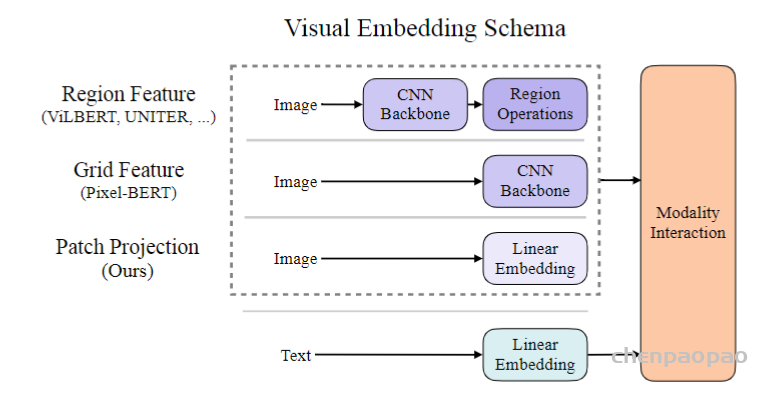
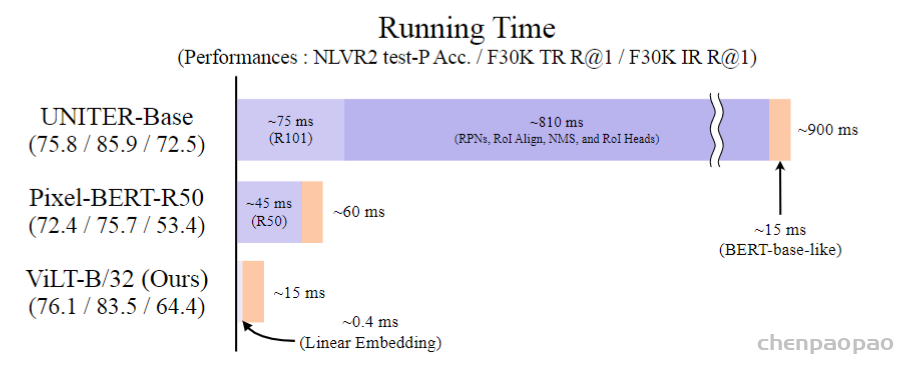
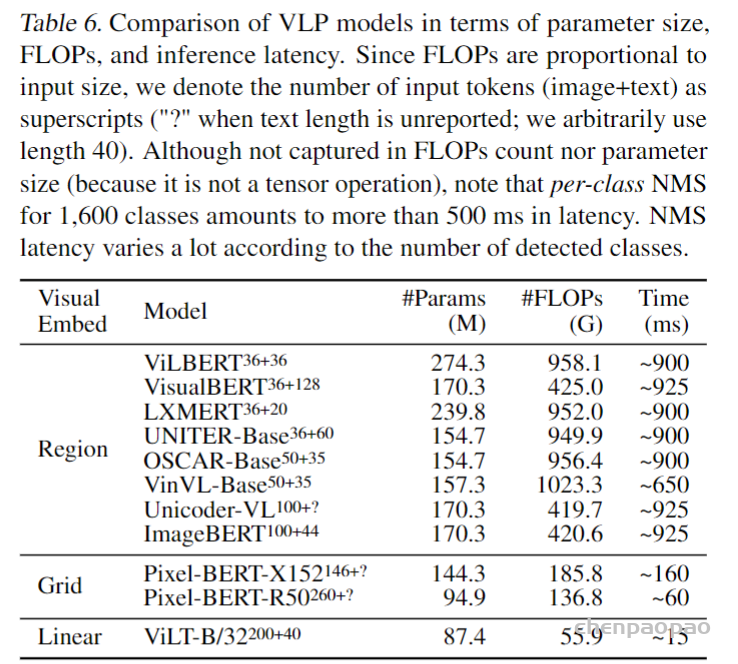
Vision and Language Pre-training(VLP)已经已经在视觉语言的多模态下游任务中发展的很好。然而,当前VLP的工作主要集中在图像特征抽取上,一般来讲,图像特征抽取的越好,下游任务中的表现就越好。但是,现在主要有两个问题,一是效率太低,速度太慢,抽取图像特征花费大量时间,比多模态融合都多。我们应该花费更多时间在融合上。第二个是,你用一个预训练好的模型去抽取特征,表达能力受限。目标检测数据集不够大,规模不够大。如果模型不是端到端学习,只是从预训练模型抽取特征,大概率来说不是最优解。
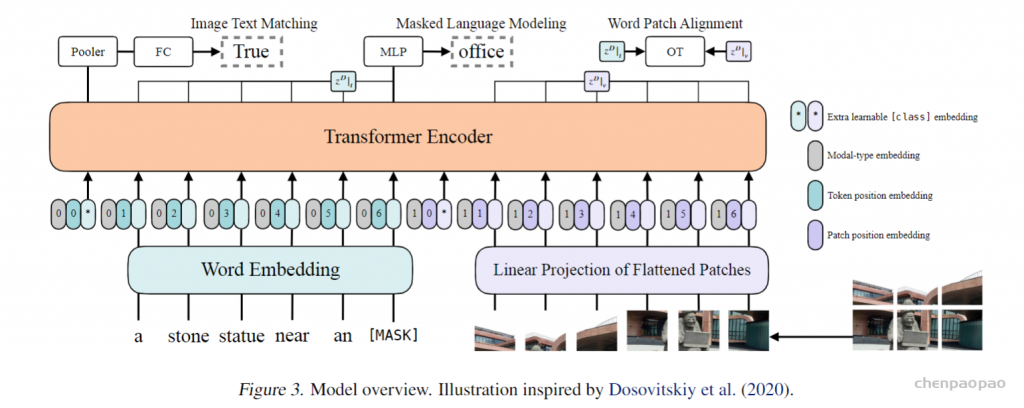
Masked Language Modeling:MLM的目标是通过文本的上下文信息去预测masked的文本tokens。随机以0.15的概率mask掉tokens,然后文本输出接两层MLP与车mask掉的tokens。
Whole Word Masking:另外ViLT还使用了whole word masking技巧。whole word masking是将连续的子词tokens进行mask的技巧,避免了只通过单词上下文进行预测。比如将“giraffe”词tokenized成3个部分[“gi”, “##raf”, “##fe”],可以mask成[“gi”, “[MASK]”, “##fe”],模型会通过mask的上下文信息[“gi”,“##fe”]来预测mask的“##raf”,就会导致不利用图像信息。
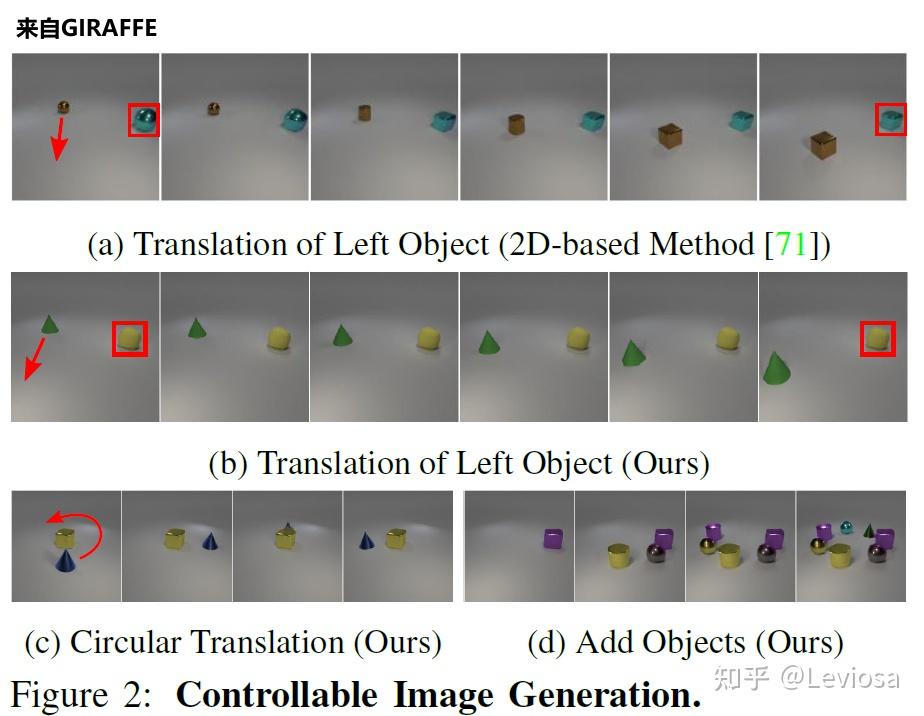
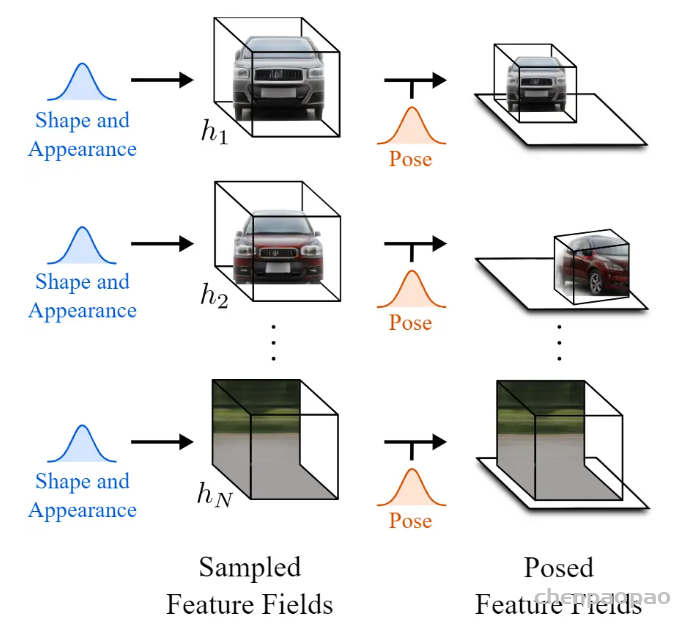
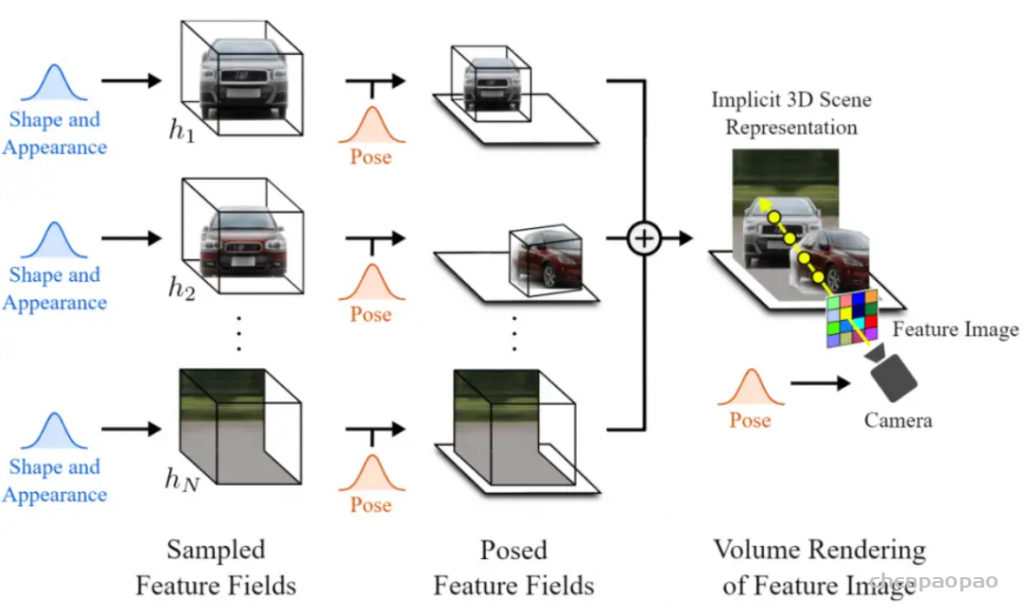
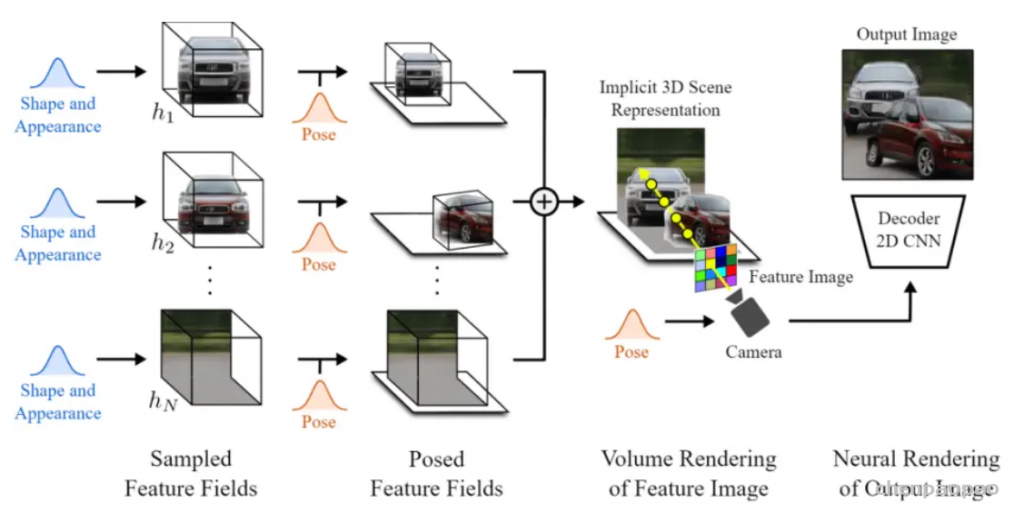
在GRAF之后,GIRAFFE实现了composition(创作)。在NeRF、GRAF中,一个Neural Radiance Fields表示一个场景,one model per scene。而在GIRAFFE中,一个Neural Radiance Fields只表示一个物体,one object per scene(背景也算一个物体)。这样做的妙处在于可以随意组合不同场景的物体,可以改变同一场景中不同物体间的相对位置,渲染生成更多训练数据中没有的全新图像。
cd $CITYSCAPES_ROOT
# 训练和校准对应的数据集
ls leftImg8bit/train/*/*.png > trainImages.txt
ls leftImg8bit/val/*/*.png > valImages.txt

# 训练和校准标签对应的数据集
ls gtFine/train/*/*labelIds.png > trainLabels.txt
ls gtFine/val/*/*labelIds.png.png > valLabels.txt

# 训练和校准实例标签对应的数据集
ls gtFine/train/*/*instanceIds.png > trainInstances.txt
ls gtFine/val/*/*instanceIds.png.png > valInstances.txt

# 训练和校准深度标签对应的数据集
ls disparity/train/*/*.png > trainDepth.txt
ls disparity/val/*/*.png.png > valDepth.txt
另外,torchvision支持很多现成数据集:
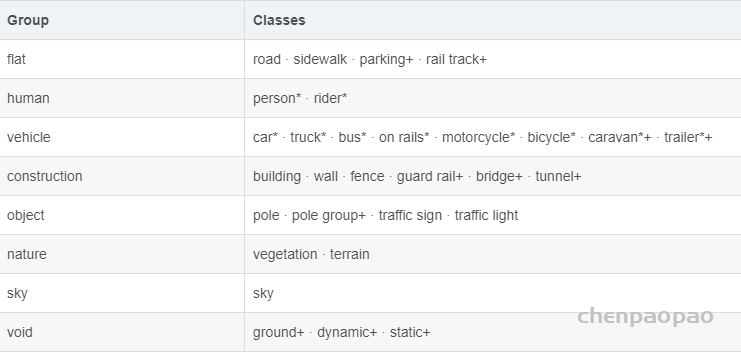
Class Definitions:
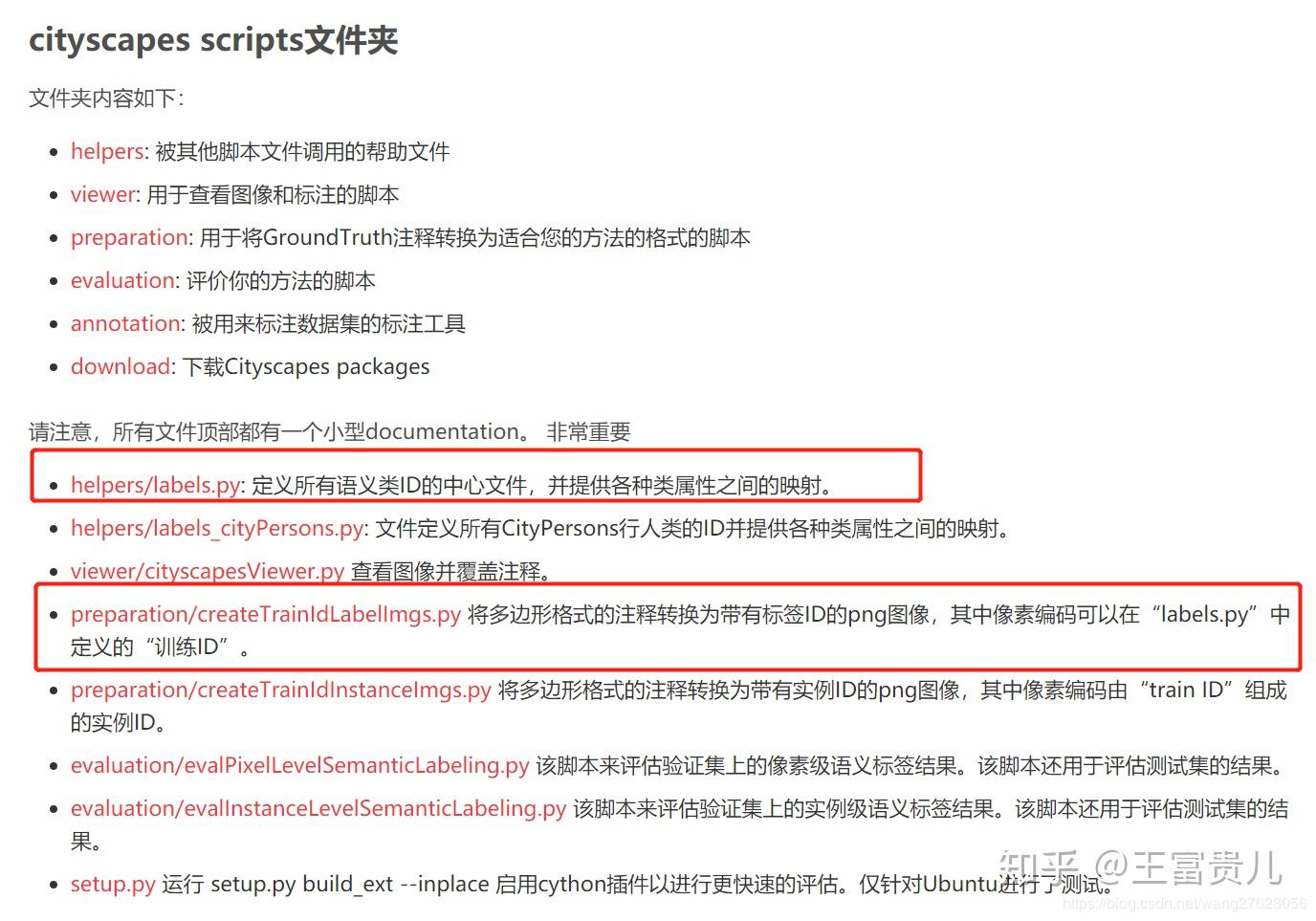
cityscapesscripts 脚本工具:
cityscapes scripts公开以下工具:
csDownload: 命令行下载cityscapes包
csViewer: 查看图像并覆盖批注(overlay the annotations)。
csLabelTool: 标注工具.
csEvalPixelLevelSemanticLabeling: Evaluate pixel-level semantic labeling results on the validation set. This tool is also used to evaluate the results on the test set.像素级评估
csEvalInstanceLevelSemanticLabeling: Evaluate instance-level semantic labeling results on the validation set. This tool is also used to evaluate the results on the test set.实例级评估
csEvalPanopticSemanticLabeling: Evaluate panoptic segmentation results on the validation set. This tool is also used to evaluate the results on the test set.全景分割评估
csCreateTrainIdLabelImgs: Convert annotations in polygonal format to png images with label IDs, where pixels encode “train IDs” that you can define in labels.py.将多边形格式的注释转换为带标签ID的png图像,其中像素编码“序列ID”,可以在labels.py中定义。
csCreateTrainIdInstanceImgs: Convert annotations in polygonal format to png images with instance IDs, where pixels encode instance IDs composed of “train IDs”.将多边形格式的注释转换为具有实例ID的png图像,其中像素对由“序列ID”组成的实例ID进行编码。
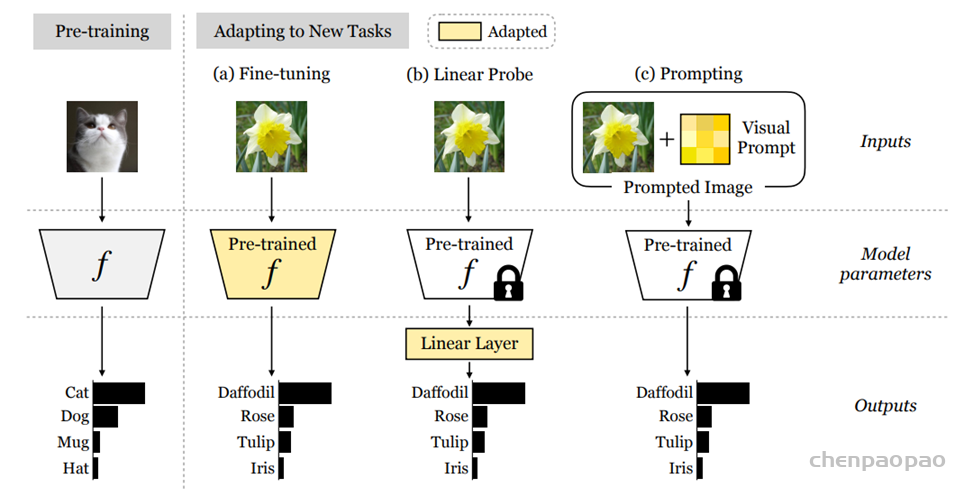
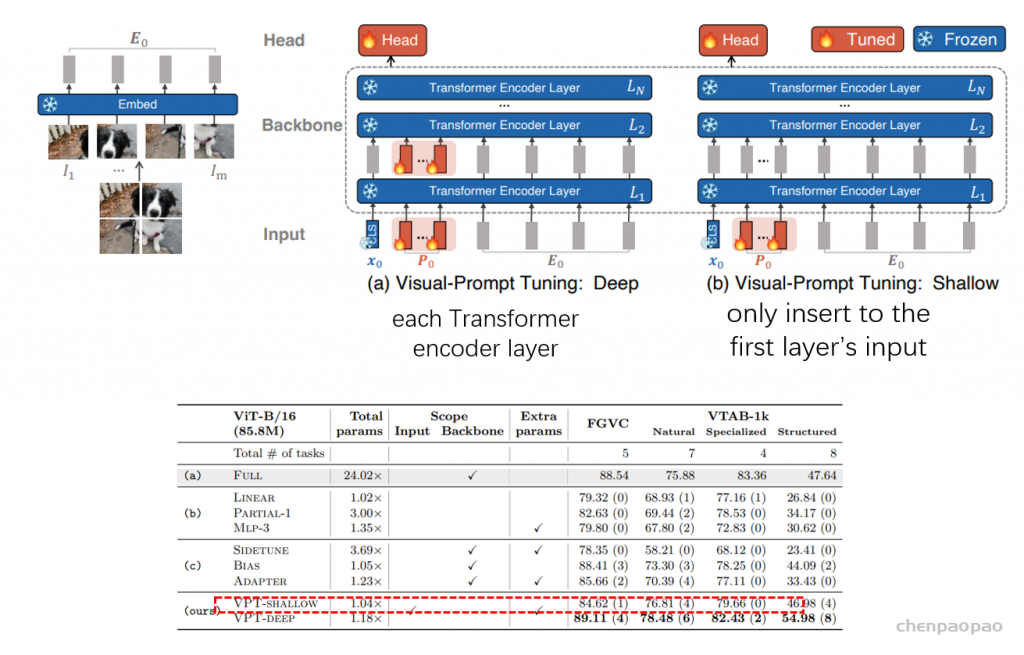
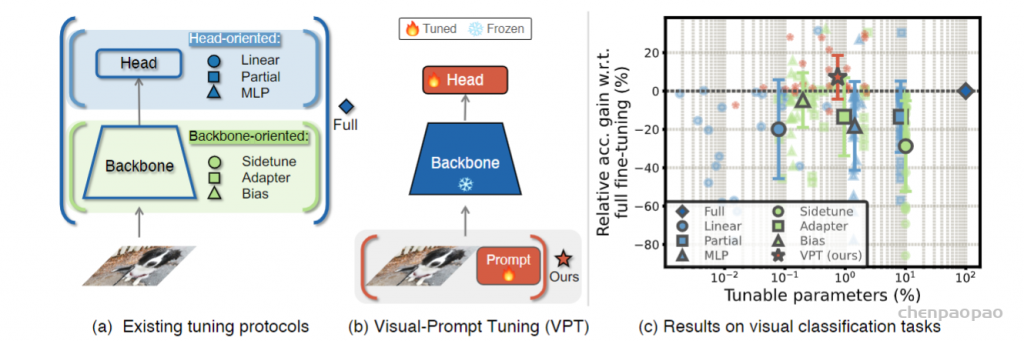
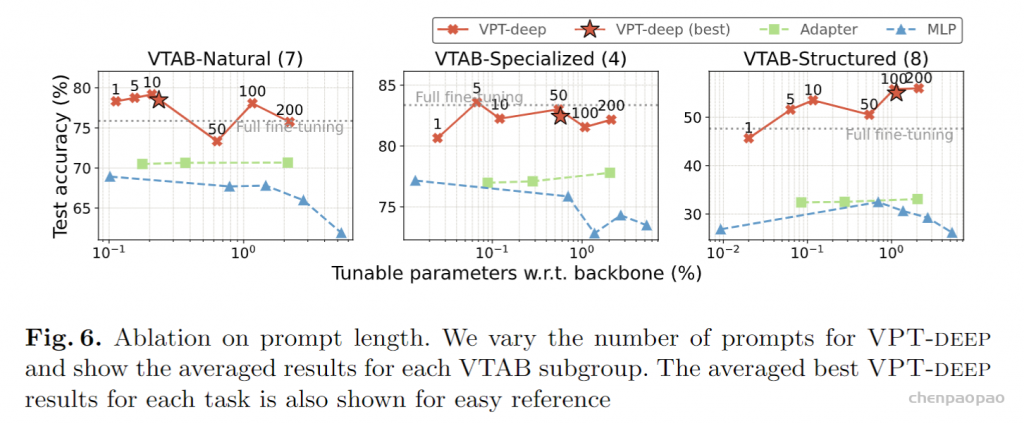
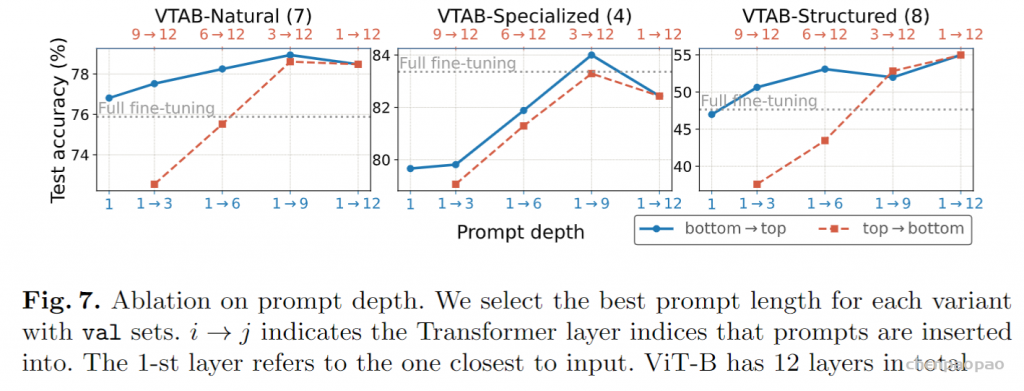
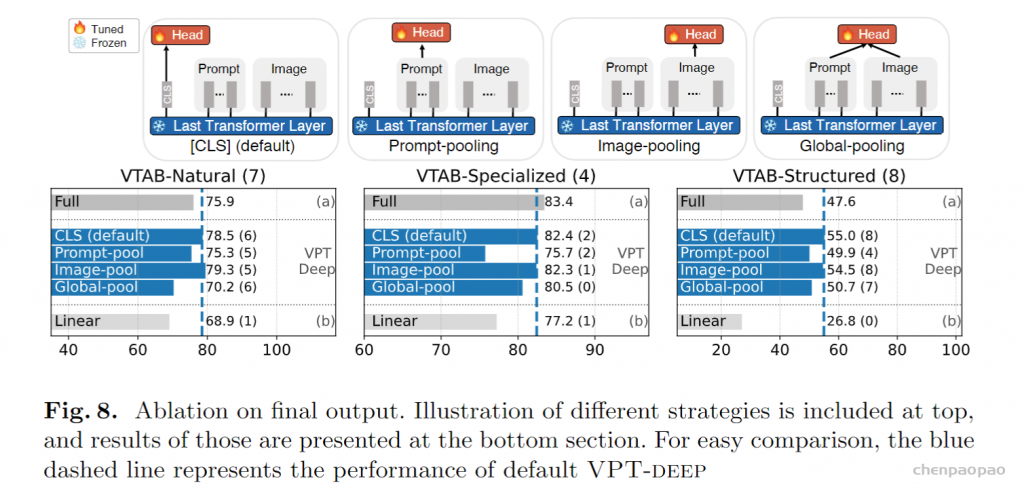
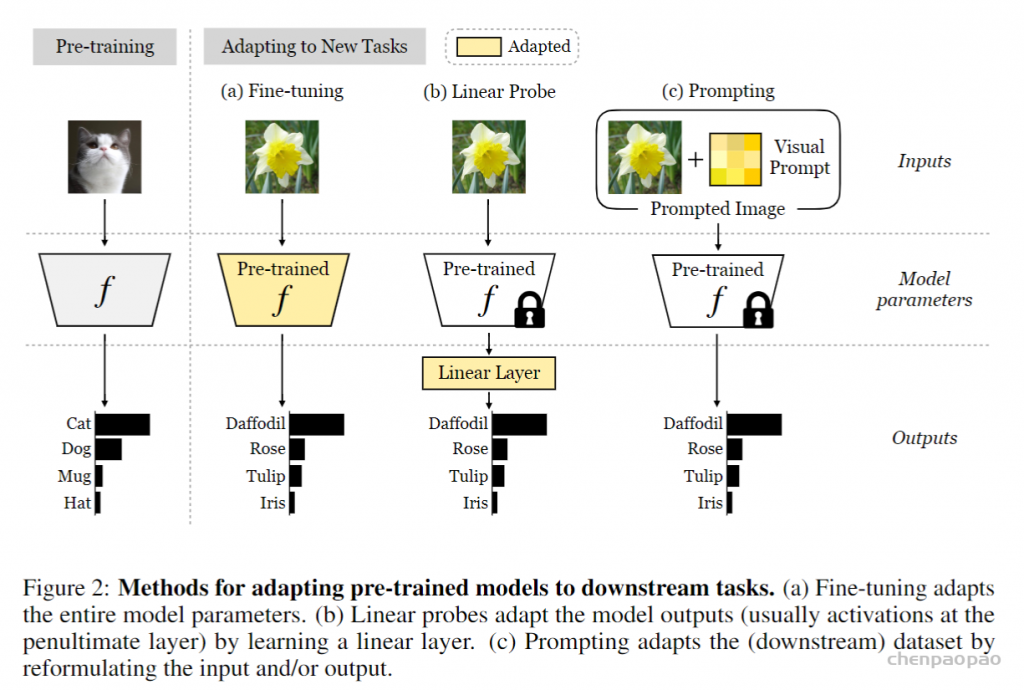
Visual-Prompt Tuning (VPT) vs . other transfer learning methods. (a) Current transfer learning protocols are grouped based on the tuning scope: Full fine-tuning, Head-oriented, and Backbone-oriented approaches. (b) VPT instead adds extra pa- rameters in the input space. (c) Performance of different methods on a wide range of downstream classification tasks adapting a pre-trained ViT-B backbone, with mean and standard deviation annotated. VPT outperforms Full fine-tuning 20 out of 24 cases while using less than 1% of all model parameters
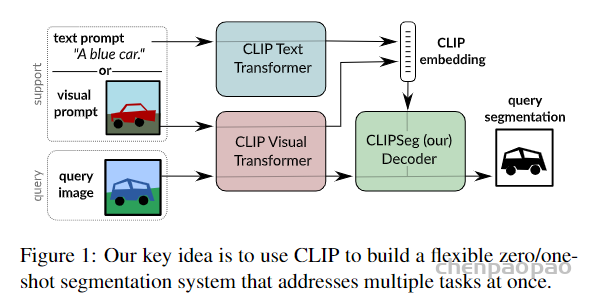
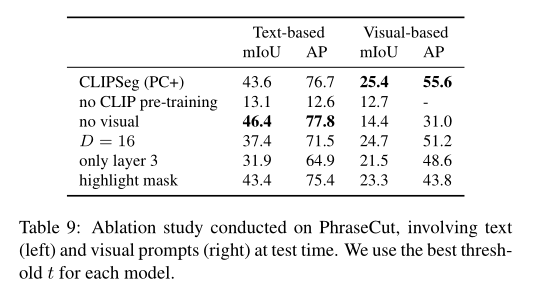
在本文的实验中,作者使用 CLIP ViT-B/16,patch大小 P 为 16,如果没有另外说明,则使用 D = 64 的投影尺寸。作者在 S = [3 , 7 , 9] 层提取 CLIP 激活,因此本文的解码器只有三层。
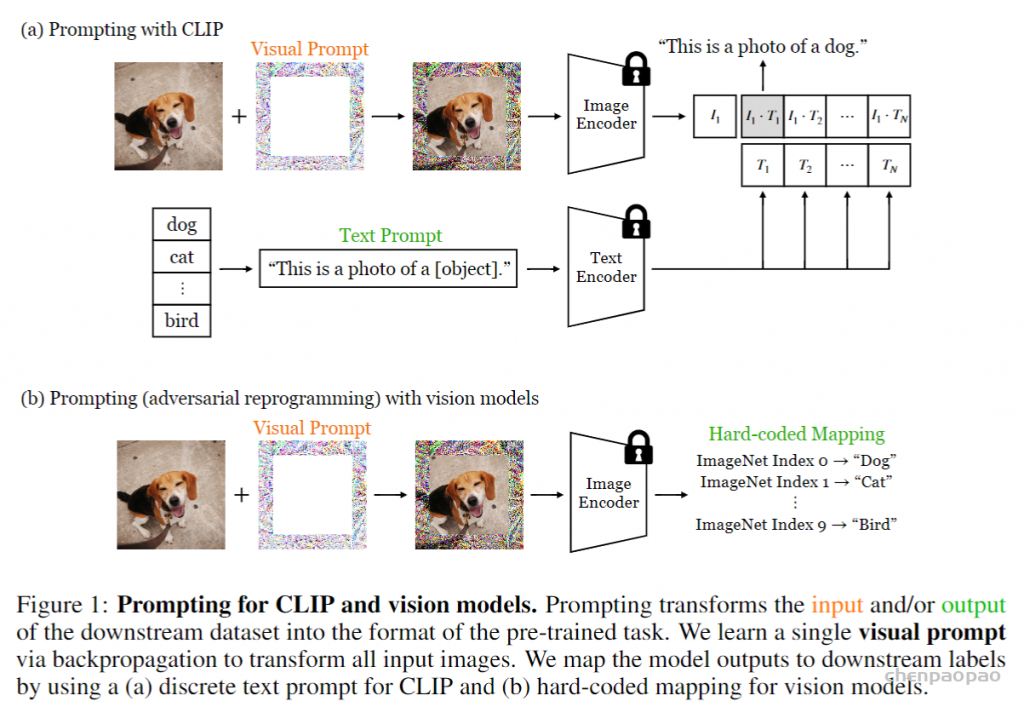
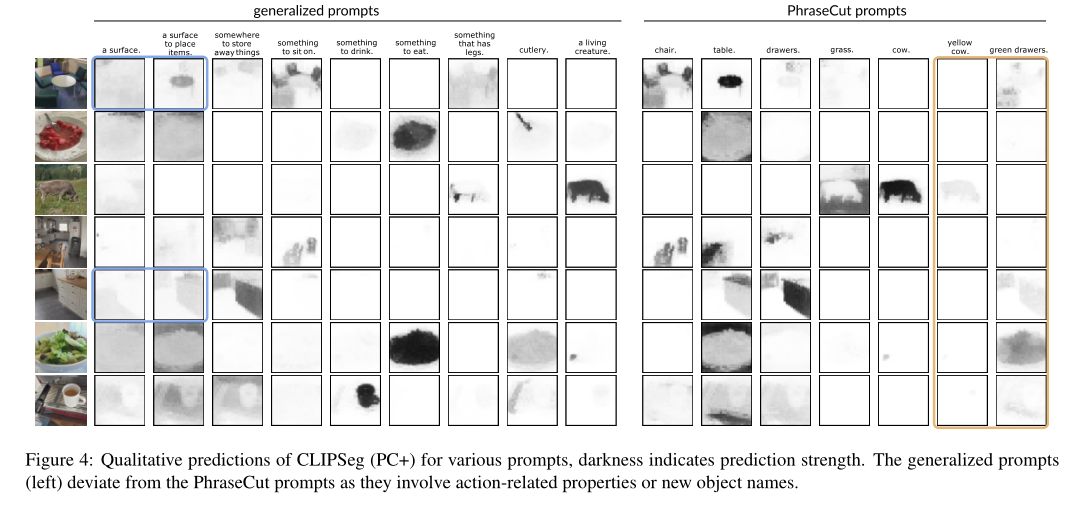
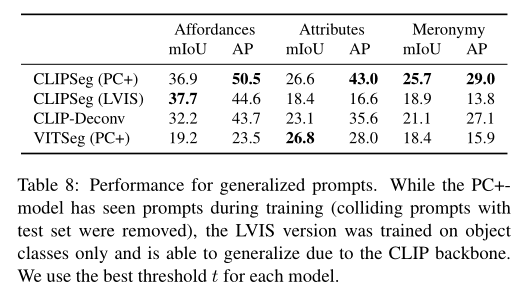
模型通过条件向量接收有关分割目标的信息(“要分割什么?”),这可以通过文本或图像(通过视觉prompt工程)提供。由于 CLIP 为图像和文本标题使用共享嵌入空间,可以在嵌入空间和插值向量上的条件之间进行插值。形式上,设是支持图像的嵌入,是样本 i 的文本嵌入,作者通过线性插值获得条件向量 ,其中 a 是从[0 , 1]均匀采样 。作者在训练期间使用这种随机插值作为数据增强策略。
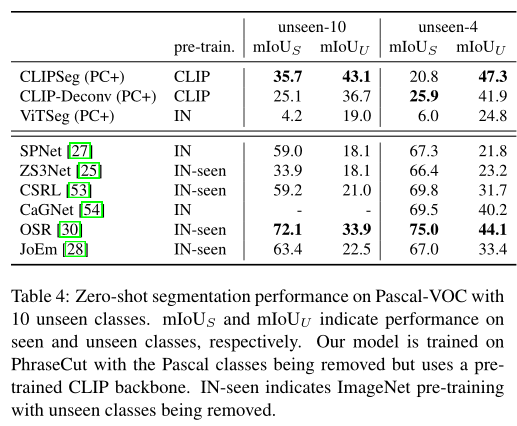
1 PhraseCut + Visual prompts (PC+)
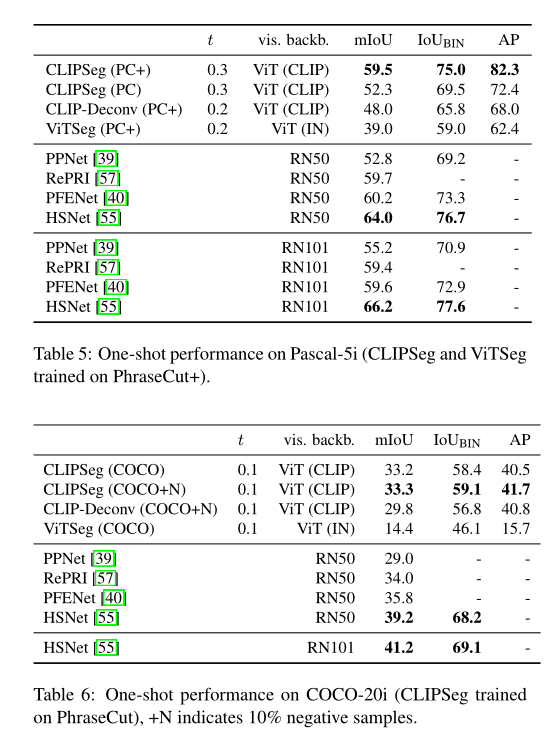
本文使用 PhraseCut 数据集,其中包含超过 340,000 个具有相应图像分割的短语。最初,该数据集不包含视觉支持,而仅包含短语,并且每个短语都存在相应的对象。作者以两种方式扩展这个数据集:视觉支持样本和负样本。为了为prompt p 添加视觉支持图像,作者从共享prompt p 的所有样本的集合Sp中随机抽取。