>>> from transformers import pipeline

# 使用情绪分析流水线
>>> classifier = pipeline('sentiment-analysis')
>>> classifier('We are very happy to introduce pipeline to the transformers repository.')
[{'label': 'POSITIVE', 'score': 0.9996980428695679}]
>>> from transformers import pipeline

# 使用问答流水线
>>> question_answerer = pipeline('question-answering')
>>> question_answerer({
...     'question': 'What is the name of the repository ?',
...     'context': 'Pipeline has been included in the huggingface/transformers repository'
... })
{'score': 0.30970096588134766, 'start': 34, 'end': 58, 'answer': 'huggingface/transformers'}
from transformers import pipeline
classifier = pipeline("sentiment-analysis") # 情感分析
classifier("I've been waiting for a HuggingFace course my whole life.")
# 输出# [{'label': 'POSITIVE', 'score': 0.9598047137260437}]
也可以传几句话:
classifier(
    ["I've been waiting for a HuggingFace course my whole life.", "I hate this so much!"]
)

# 输出
'''
[{'label': 'POSITIVE', 'score': 0.9598047137260437},
 {'label': 'NEGATIVE', 'score': 0.9994558095932007}]
'''
raw_inputs = [
"I've been waiting for a HuggingFace course my whole life.",
"I hate this so much!",
]
inputs = tokenizer(raw_inputs, padding=True, truncation=True, return_tensors="pt")
print(inputs)
from transformers import BertConfig, BertModel
# Building the config
config = BertConfig()
# Building the model from the config
model = BertModel(config)
2)不同的加载方式
from transformers import BertModel
model = BertModel.from_pretrained("bert-base-cased")
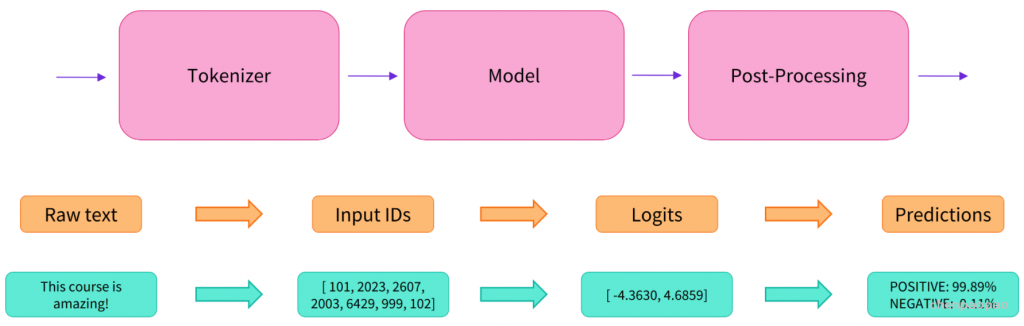
我们已经探索了分词器的工作原理,并研究了分词 tokenizers、转换为输入 ID conversion to input IDs、填充 padding、截断 truncation和注意力掩码 attention masks。Transformers API 可以通过高级函数为我们处理所有这些。
from transformers import AutoTokenizer

checkpoint = "distilbert-base-uncased-finetuned-sst-2-english"
tokenizer = AutoTokenizer.from_pretrained(checkpoint)
sequence = "I've been waiting for a HuggingFace course my whole life."
model_inputs = tokenizer(sequence)
# 可以标记单个序列
sequence = "I've been waiting for a HuggingFace course my whole life."
model_inputs = tokenizer(sequence)

# 还可以一次处理多个序列
sequences = ["I've been waiting for a HuggingFace course my whole life.", "So have I!"]
model_inputs = tokenizer(sequences)
# 可以根据几个目标进行填充# Will pad the sequences up to the maximum sequence length
model_inputs = tokenizer(sequences, padding="longest")
# Will pad the sequences up to the model max length# (512 for BERT or DistilBERT)
model_inputs = tokenizer(sequences, padding="max_length")
# Will pad the sequences up to the specified max length
model_inputs = tokenizer(sequences, padding="max_length", max_length=8)
# 还可以截断序列
sequences = ["I've been waiting for a HuggingFace course my whole life.", "So have I!"]
# Will truncate the sequences that are longer than the model max length# (512 for BERT or DistilBERT)
model_inputs = tokenizer(sequences, truncation=True)
# Will truncate the sequences that are longer than the specified max length
model_inputs = tokenizer(sequences, max_length=8, truncation=True)
# 可以处理到特定框架张量的转换,然后可以将其直接发送到模型。
sequences = ["I've been waiting for a HuggingFace course my whole life.", "So have I!"]

# Returns PyTorch tensors
model_inputs = tokenizer(sequences, padding=True, return_tensors="pt")

# Returns TensorFlow tensors
model_inputs = tokenizer(sequences, padding=True, return_tensors="tf")

# Returns NumPy arrays
model_inputs = tokenizer(sequences, padding=True, return_tensors="np")
Special tokens
分词器在开头添加特殊词[CLS],在结尾添加特殊词[SEP]。
sequence = "I've been waiting for a HuggingFace course my whole life."

model_inputs = tokenizer(sequence)
print(model_inputs["input_ids"])

tokens = tokenizer.tokenize(sequence)
ids = tokenizer.convert_tokens_to_ids(tokens)
print(ids)

# 输出
'''
[101, 1045, 1005, 2310, 2042, 3403, 2005, 1037, 17662, 12172, 2607, 2026, 2878, 2166, 1012, 102]
[1045, 1005, 2310, 2042, 3403, 2005, 1037, 17662, 12172, 2607, 2026, 2878, 2166, 1012]
'''

print(tokenizer.decode(model_inputs["input_ids"]))
print(tokenizer.decode(ids))

# 输出
'''
"[CLS] i've been waiting for a huggingface course my whole life. [SEP]"
"i've been waiting for a huggingface course my whole life."
'''
# 总结:从分词器到模型
import torch
from transformers import AutoTokenizer, AutoModelForSequenceClassification

checkpoint = "distilbert-base-uncased-finetuned-sst-2-english"
tokenizer = AutoTokenizer.from_pretrained(checkpoint)
model = AutoModelForSequenceClassification.from_pretrained(checkpoint)
sequences = ["I've been waiting for a HuggingFace course my whole life.", "So have I!"]

tokens = tokenizer(sequences, padding=True, truncation=True, return_tensors="pt")
output = model(**tokens)
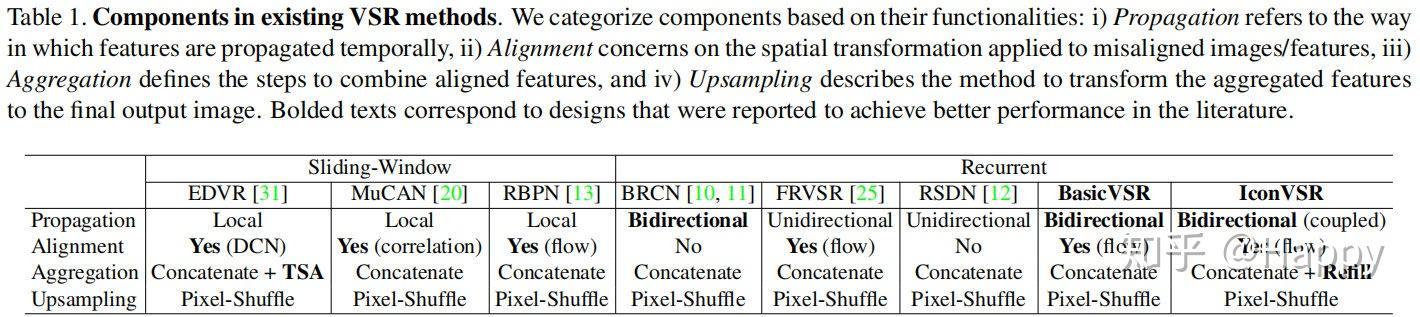
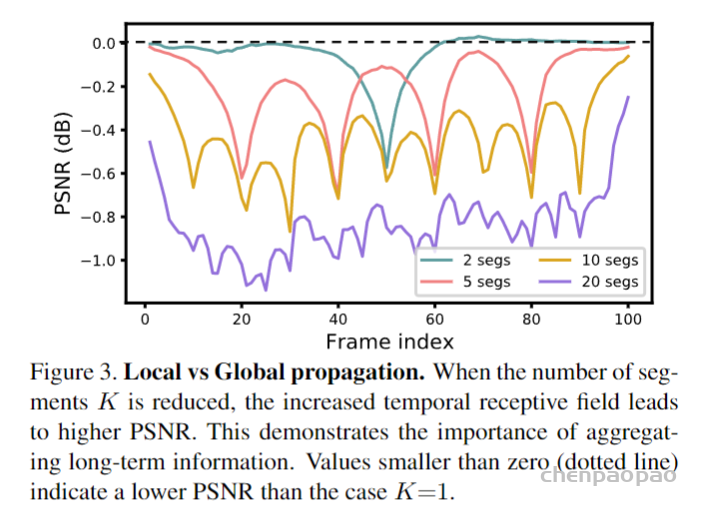
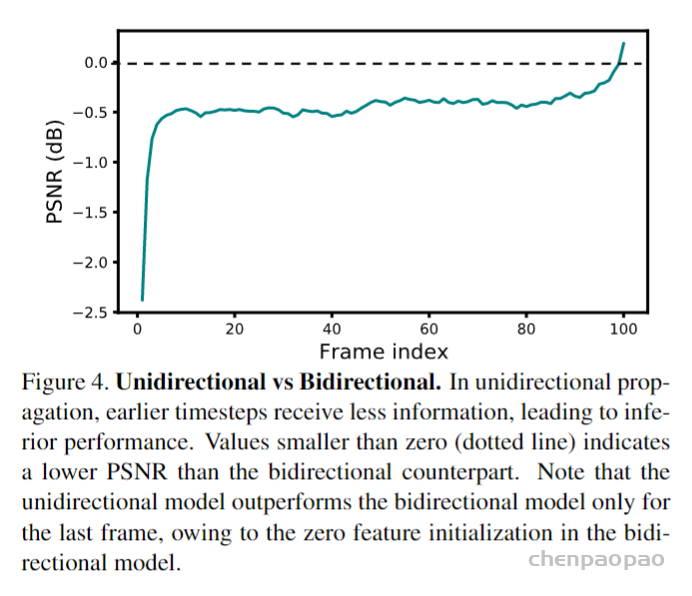
Local Propagation: 滑动窗口的方法(比如RBPN,TGA,EDVR)采用局部窗口内的多帧LR图像作为输入并进行中间帧的重建。这种设计方式约束了信息范围,进而影响了模型的性能。下图给出了不同信息范围下的模型性能对比,可以看到:(1)全局信息的利用具有更佳性能;(2) 片段的两端性能差异非常大,说明了长序列累积信息(即全局信息)的重要性。
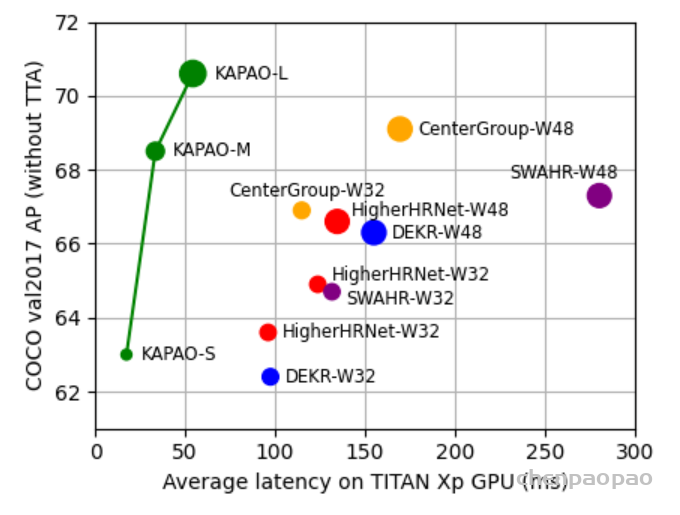
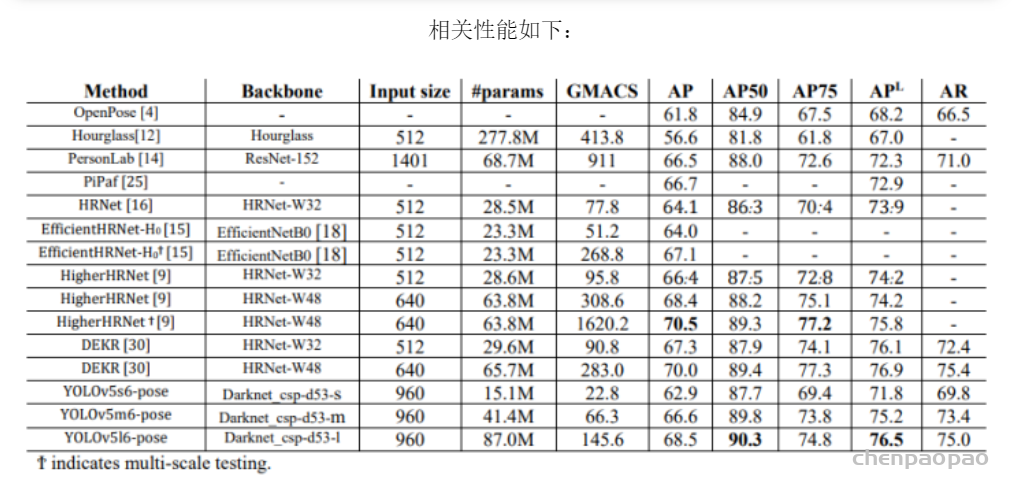
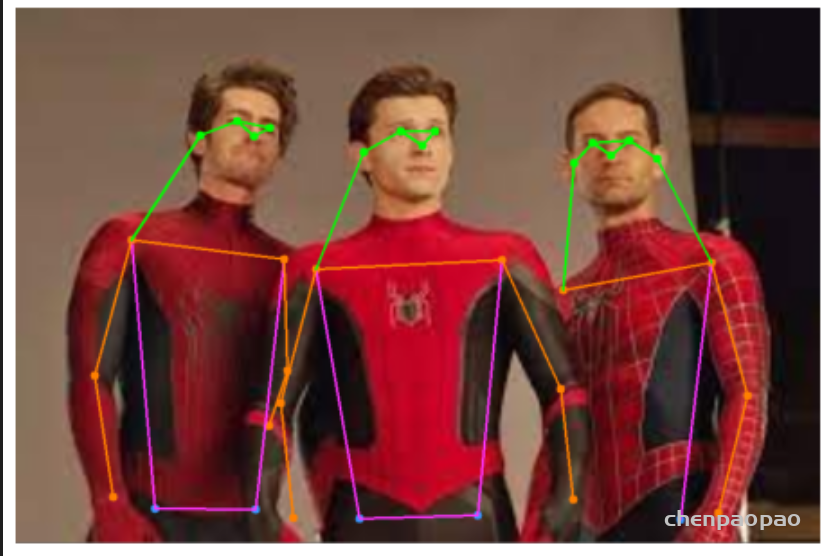
去年11月,滑铁卢大学率先提出了 KaPao:Rethinking Keypoint Representations: Modeling Keypoints and Poses as Objects for Multi-Person Human Pose Estimation,基于YOLOv5进行关键点检测,该文章目前已被ECCV 2022接收,该算法所取得的性能如下:
自从全卷积网络(Fully Convolutional Networks, FCN)和UNet提出以来,主流的改进思路是围绕着编解码结构来进行的。但又一些改进在当时看来却不是那么“主流”,其中有一些是针对如何提升网络的全局信息提取能力来进行改进的。FCN提出之后,一些学者认为FCN忽略了图像作为整张图的全局信息,因而在一些应用场景下不能有效利用图像的语义上下文信息。图像全局信息除了增加对图像的整体理解之外,还有助于模型对局部图像块的判断,此前一种主流的方法是将概率图模型融入到CNN训练中,用于捕捉图像像素的上下文信息,比如说给模型加条件随机场(Conditional Random Field,CRF),但这种方式会使得模型难以训练并且变得低效。
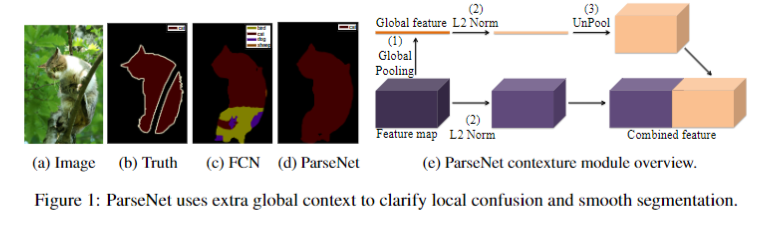
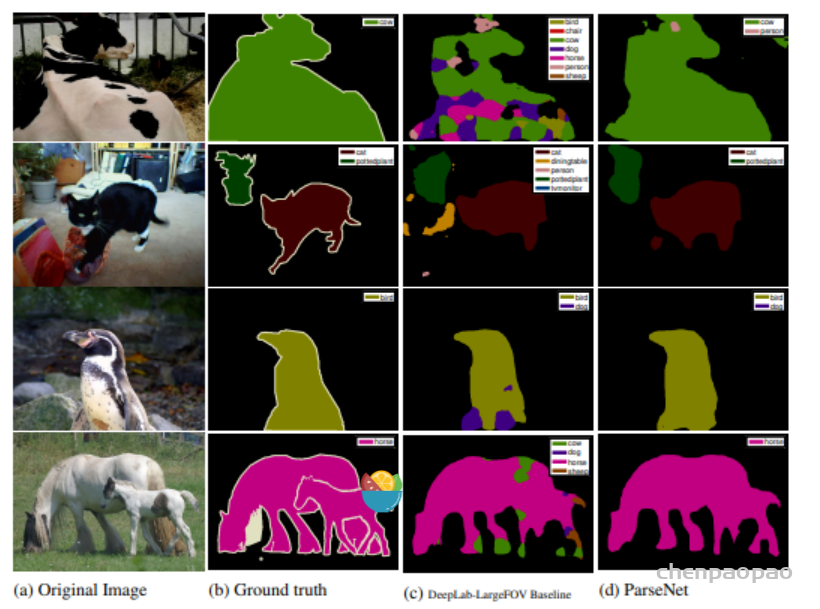
针对如何高效利用图像的全局信息问题,相关研究在FCN结构的基础上提出了ParseNet,一种高效的端到端的语义分割网络,旨在利用全局信息来指导局部信息判断,并且引入太多的额外计算开销。提出ParseNet的论文为ParseNet: Looking Wider to See Better,发表于2015年,是在FCN基础上基于上下文视角的一个改进设计。在语义分割中,上下文信息对于提升模型表现非常关键,在仅有局部信息情况下,像素的分类判断有时候会变得模棱两可。尽管理论上深层卷积层的会有非常大的感受野,但在实际中有效感受野却小很多,不足以捕捉图像的全局信息。ParseNet通过全局平均池化的方法在FCN基础上直接获取上下文信息,图1为ParseNet的上下文提取模块,具体地,使用全局平均池化对上下文特征图进行池化后得到全局特征,然后对全局特征进行L2规范化处理,再对规范化后的特征图反池化后与局部特征图进行融合,这样的一个简单结构对于语义分割质量的提升的巨大的。如图2所示,ParseNet能够关注到图像中的全局信息,保证图像分割的完整性。